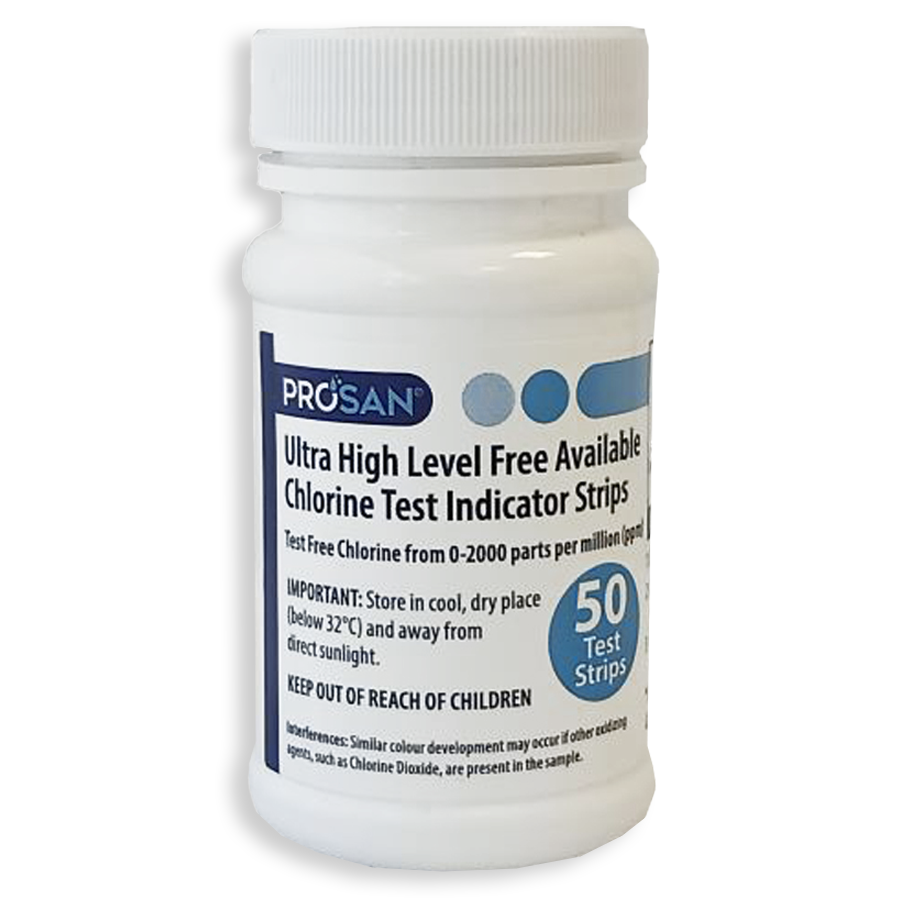


Description
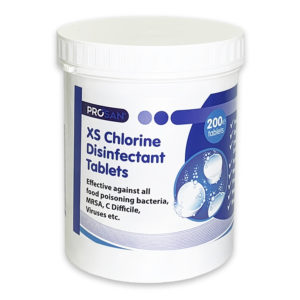
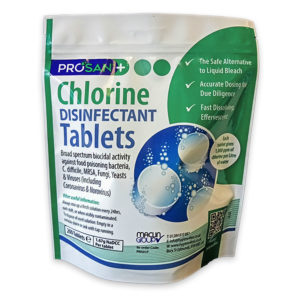
Chlorination Tablets (contains 1.7g NaDCC)
Our Chlorination Tablets are referred to under different names but they are all the same active ingredient known as sodium dichloroisocyanurate (Trolosene sodium, NaDCC) and often referred to as:
- Chlorine tablets
- Chlorination Tablets
- Hypochlorite Tablets
- Bleach Tablets
- Cyanuric Acid Tablets
Some “Brand” names you may be familiar with are Actichlor, Sanichlor, Haz Tab, Biospot, Klorsept and Chlorclean.
Maclin Produce under Branded and Own Label for Distributors all over the World
PRODUCT USES AND EFFECTIVENESS
Each 3.2g Chlorination Tablet allows for easy to calculate precise dosing requirements, making them perfect for due diligence. For reference:
- 1 tablet in 1 Litre = 1,000 parts per million* available chlorine
- 1 tablet in 5 Litres = 200 parts per million* available chlorine
*abbreviation to ppm
Typical Uses in Private and Public Health areas:
- Non metallic medical and veterinary appliances
- Mops, cloths and glassware
- General disinfection
- Body fluid spills
- Drains, sinks, W.C. pans, W.C.’s
- Laboratory discard jars
- Conditions of heavy soiling
- Veterinary hygiene:
- General hygiene
- Conditions of heavy soiling
- Food and feed disinfectants:
- Food preparation areas; non metallic equipment, containers, consumption utensils, work surfaces, stainless steel (catering grade)
- Baby bottle sterilisation
- Drinking water disinfection:
- Chlorination of animals drinking water
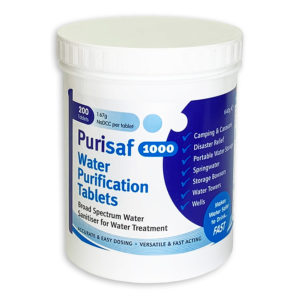
- Emergency water purification
Instructions for the use of Tablets in Typical Disinfection Applications:
| DILUTION TABLE 3.2g Chlorination Tablets (1.7g NaDCC) | ||
| 1 TABLET IN | GIVES AVAILABLE CHLORINATION OF | TYPICAL USES |
| 100ml | 10,000 ppm | Body fluid spills and conditions of heavy soiling |
| 400ml | 2,500 ppm | Non metallic medical, veterinary appliances and laboratory discard jars |
| 1 Litre | 1,000 ppm | General disinfection |
| 2.5 Litres | 400 ppm | WC’s, drains, sinks |
| 2 Litres | 500 ppm | Food preparation areas |
| 8 Litres | 125 ppm | Baby bottle sterilisation |
| 1 Litre | 1,000 ppm | Cloths and mops |
Guidelines for the use of 3.2g ECT for glassware, mops and cloths:
- After cleaning mops or cloths, dissolve 1 tablet in the recommended amount of water to produce 1,000 ppm of available chlorine.
- Immerse the cloth or mop in the solution for a maximum of 30 minutes. Do not leave overnight.
Guidelines for the use of 3.2g ECT for food preparation surfaces and food processing equipment:
- Remove loose debris with a clean, loosely-folded cloth.
- Wash with a hot neutral detergent solution and cloth. An abrasive nylon pad may also be useful.
- Rinse with hot water and a clean cloth.
- Drop one 3.2g ECT into the recommended amount of water, preferably warm (40°C) to provide 500 ppm of available chlorine. (Warm water assists the process of disinfection and also speeds up the tablet dissolution time.)
- Thoroughly wet the cleaned surface with the disinfecting solution by the most suitable means, e.g. trigger spray or disposable cloth. Leave wet for a minimum of 3 minutes. (Providing the surface is thoroughly clean this is sufficient contact time for positive disinfection.)
- Rinse off with fresh, clean water.
- Allow to air-dry or use disposable paper towel.
- IN THE CASE OF DANGEROUS OR ELECTRICAL EQUIPMENT (E.G. SLICING MACHINES), PRELIMINARY SAFETY PROCEDURES AND FINAL SAFETY CHECKS WILL BE REQUIRED, SEVERAL TYPES OF EQUIPMENT WILL NEED PARTIAL OR COMPLETE DISMANTLING TO ENSURE EFFECTIVE CLEANING AND DISINFECTION.
WARNING: To be effective, disinfectant solutions must be made up fresh each day (or every shift change) and be of the correct concentration/strength.
When using the tablets for FOGGING:
- Dissolve 1 tablet in 1 Litres Water gives 1,000 parts per million available chlorine (HoCl).
Our Chlorine Tablets are compliant of NHS England’s Health Technical Memorandum 01-05: Decontamination in Primary Care Dental Practices. Click here to read more.
Technical Information:
Hypochlorous acid (HOCl or HClO) is a weak acid that forms when chlorine dissolves in water. It also partially dissociates, forming hypochlorite, ClO−. HClO and ClO− are oxidisers, and the primary disinfection agents of chlorine solutions.
CAS: 2893-78-9 EC/EINECS No.: 220-767-7 Export Tariff: 3808 942090
Use biocides safely. Always read the label and product information before use.