

Description
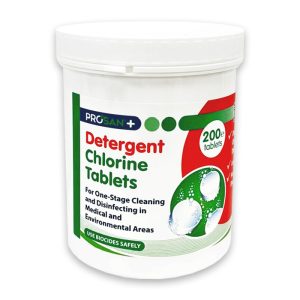
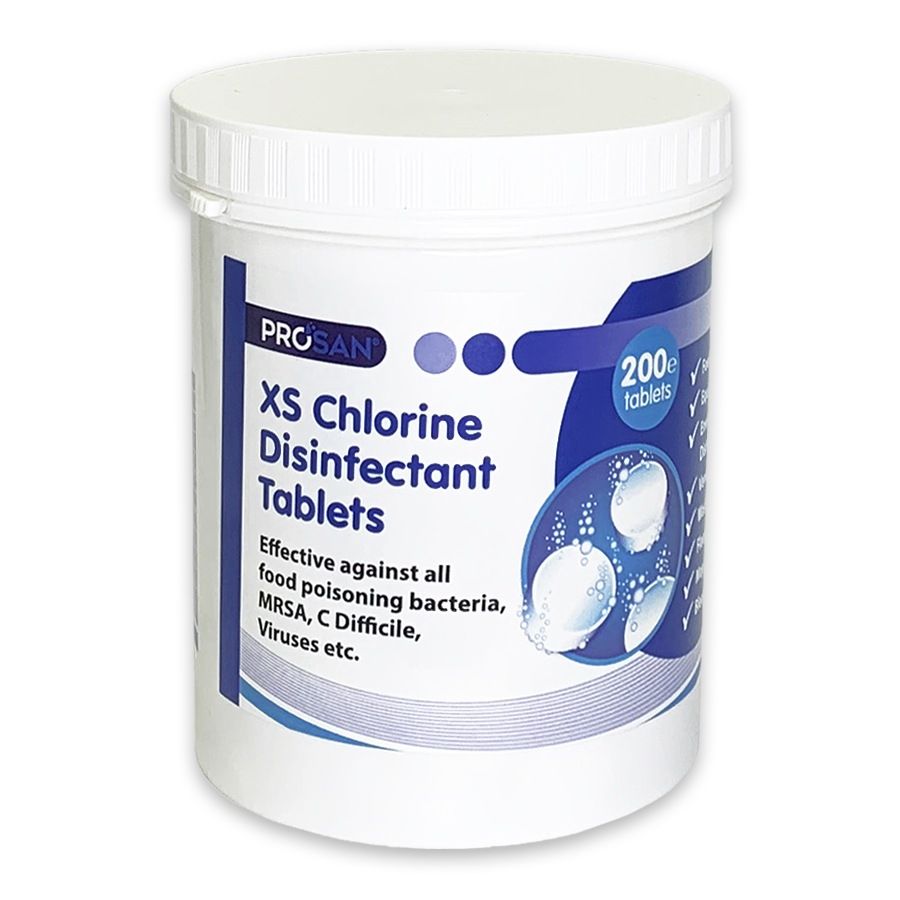
Prosan Extra Strength Effervescent Chlorine Tablets
The safe alternative to liquid bleach. Our tablets release accurate solutions when dissolved in water and their strength does not degrade whilst in storage. Further, they have an extended shelf life for up to 5 years!
Prosan Extra Strength Chlorine Tablets are equivalent to Actichlor Plus, SoChlor 2.5g NaDCC Tablets, Presept 2.5g NaDCC Tablets and Haz Tab H8811 2.5g NaDCC Effervescent Tablets.
PRODUCT USES AND EFFECTIVENESS
Typical Uses in Private and Public Health areas include:
- Non metallic medical and veterinary appliances
- Mops, cloths and glassware
- General disinfection
- Body fluid spills
- Drains, sinks, W.C. pans, W.C.’s
- Laboratory discard jars
- Conditions of heavy soiling
- Veterinary hygiene:
- General hygiene
- Conditions of heavy soiling
- Food and feed disinfectants:
- Food preparation areas; non metallic equipment, containers, consumption utensils, work surfaces, stainless steel (catering grade)
- Baby bottle sterilisation
- Disinfection of salads, vegetables, non-peelable fruit
- Drinking water disinfection:
- Chlorination of animals drinking water
- Emergency water purification
Dilutions:
| DILUTION TABLE for 3.5g Prosan XS Tablets (2.5g NaDCC) | ||
| 1 TABLET IN | GIVES AVAILABLE CHLORINE OF | TYPICAL USES |
| 150ml | 10,000 ppm | Body fluid spills & conditions of heavy soiling |
| 600ml | 2,500 ppm | Non metallic medical & veterinary appliances & laboratory discard jars |
| 1.5 Litre | 1000 ppm | General disinfection |
| 3.75 Litres | 400 ppm | WC’s, drains, sinks |
| 3 Litres | 500 ppm | Food preparation areas |
| 12 Litres | 125 ppm | Baby bottle sterilisation |
| 1.5 Litres | 1000 ppm | Cloths & mops |
Guidelines for the use of 3.5g ECT for glassware, mops and cloths:
After cleaning mops or cloths, dissolve 1 tablet in the recommended amount of water to produce 1000ppm of available chlorine. Immerse the cloth or mop in the solution for 30 minutes. Do not leave overnight.
Guidelines for the use of 3.5g ECT for food preparation surfaces and food processing equipment:
- Remove loose debris with a clean, loosely-folded cloth.
- Wash with a hot neutral detergent solution and cloth. An abrasive nylon pad may also be useful.
- Rinse with hot water and a clean cloth.
- Drop one 3.5g ECT into the recommended amount of water, preferably warm (40°C) to provide 500 ppm of available chlorine. (Warm water assists the process of disinfection while quickening the tablet dissolution time.)
- Thoroughly wet the cleaned surface with the disinfecting solution by the most suitable means, e.g. trigger spray or disposable cloth. Leave wet for a minimum of 3 minutes. (Providing the surface is thoroughly clean this is sufficient contact time for positive disinfection.)
- Rinse off with fresh, clean water.
- Allow to air-dry or use disposable paper towel.
- IN THE CASE OF DANGEROUS OR ELECTRICAL EQUIPMENT (E.G. SLICING MACHINES), PRELIMINARY SAFETY PROCEDURES AND FINAL SAFETY CHECKS WILL BE REQUIRED, SEVERAL TYPES OF EQUIPMENT WILL NEED PARTIAL OR COMPLETE DISMANTLING TO ENSURE EFFECTIVE CLEANING AND DISINFECTION. WARNING: TO BE EFFECTIVE, DISINFECTANT SOLUTIONS MUST BE MADE UP FRESH EACH DAY AND BE OF CORRECT CONCENTRATION.
Guidelines for the preparation of 3.5g Effervescent chlorine tablets for washing salads, vegetables and non-peelable fruit:
Where Fresh Produce is consumed within 24 Hours of washing:
- Remove as much dirt and debris from the vegetables and fruit as possible by thoroughly rinsing in cold fresh drinking water.
- Prepare the Prosan 3.5g ECT solution by adding the appropriate quantity of tablets to the recommended volume of water to give the required amount of free available chlorine in solution according to the recommended contact time*. Where possible, try to ensure that the temperature of the rinse water is greater than that of the fresh produce (ideally 10°C higher). In practice potable tap water from the mains supply is satisfactory.
- Add the vegetables or fruit to the solution for the recommended contact time. Ensure produce is completely submerged. Agitate produce to remove excess air bubbles.
- Fruit or vegetables should be eaten as soon as possible after washing. It is preferable not to rinse after washing, except where the food will be consumed in <2 hours, in which case rinse with clean, fresh potable drinking water.
- If storage is required, remove the produce from solution and shake off excess liquid. If possible, spin dry. Place in a sealable polythene bag or an equivalent air-tight container and store under refrigerated conditions at 4 to 8°C for as short a period as possible (<24 hours).
*Some produce, which is grown under heavily contaminated conditions, i.e. cress, peppers, requires the solution strength to be doubled.
Where storage of Fresh Produce is required for longer than 1 day:
- Remove as much dirt and debris from the vegetables and fruit as possible by thoroughly rinsing in cold fresh drinking water
- Prepare the ECT solution by adding the appropriate quantity of tablets to the recommended volume of water to give the required amount of free available chlorine in solution according to the recommended contact time*. Where possible, try to ensure that the temperature of the rinse water is greater than that of the fresh produce (ideally 10°C higher). In practice potable tap water from the mains supply is satisfactory.
- Add the vegetables or fruit to the solution for the recommended contact time. Ensure produce is completely submerged. Agitate produce to remove excess air bubbles.
- Remove from solution and rinse with potable water. Shake off as much excess water as possible from the produce. If possible, spin dry. Place on clean dry trays and store under refrigerated conditions at 4 to 8°C for as short a period as possible.
- Immediately before use, remove the fresh produce from storage and rinse with potable water.
*Some produce, which is grown under heavily contaminated conditions, i.e. cress, peppers, requires the solution strength to be doubled.
Additional information for fruit and vegetable handling guidance has been provided by the Sandwich and Salad Association (Appendix 2, 2001).
| 3.5g (2.5g NaDCC) Effervescent Chlorine Tablet SALAD & VEG WASH DOSING CHART | ||
| CATERING: Where there is only a short period of time between preparation and consumption of the food. | ||
| No of tablets per 60 Litre water | Gives available chlorine of: | Suggested Contact Time: |
| 1 | 25 ppm | 15 mins and rinse |
| 2 | 50 ppm | 10 mins and rinse |
| 3 | 75 ppm | 5 mins and rinse |
| IN FLIGHT CATERING AND THE SANDWICH MAKING INDUSTRY: Where there is a lengthy time lapse between preparation and consumption. (No rinse required) | ||
| 2 | 50 ppm | 15 mins and air dry |
| 4 | 75 ppm | 10 mins and air dry |
| 6 | 150 ppm | 5 mins and air dry |
Number of application times and contact times and, if necessary or applicable, all special and specific information relevant to the geographical and climatic fluctuations or necessary waiting times for the protection of human beings or animals.
Guidelines for the use of Prosan XS Tablets in Hospitals:
| 3.5g (2.5g NaDCC) Effervescent Chlorine Tablets –Typical Hospital Usage | |||
| 1 Tablet in: | Gives Available Chlorine of: | Task: | Method: |
| 150 ml | 10,000 ppm | Body Fluid Spills | Leave for 2 Mins |
| 600 ml | 2,500 ppm | Laboratory Discard Jars | Soak Overnight |
| 1.5 Litres | 1,000 ppm | General Disinfection(High Risk Areas) | 15 Min Contact Time |
| 3.75 Litres | 400 ppm | Drains, W.C’s, Sinks etc | Pour in at quiet times |
| 12 Litres | 125 ppm | Baby Bottles Sterilising | Min 30 Mins |
| 1.5 Litres | 1000 ppm | Cloths Mops etc | 30 Minutes. Do not leave overnight |
The dilutions for Catering applications are:
Hard surface disinfection post cleaning – 1 tablet in 7.5 litres of water to give 200 ppm. A minimum contact time of 3 minutes, then allow to air dry or use clean paper towels.
When using the tablets for FOGGING:
If you are using tablets to create a HOCl solution, 1 tablet in 1.5 Litres Water gives 1,000 parts per million available chlorine (HoCl).
Technical Information:
Hypochlorous acid (HOCl or HClO) is a weak acid that forms when chlorine dissolves in water. It also partially dissociates, forming hypochlorite, ClO−. HClO and ClO− are oxidisers, and the primary disinfection agents of chlorine solutions.
CAS: 2893-78-9 EC/EINECS No.: 220-767-7 Export Tariff: 3808 942090
NOTE: All of the above information is offered without any implied warranty or indemnity. The user should satisfy themselves that the product is used in accordance with local guidelines and instructions.